Featured post

DEMOCRACY, ACCOUNTABILITY, CITIZENSHIP IN MY WORKS 2022-2018

I am studying Tech Governance since 1992 and focusing on artificial intelligence (AI) since 2018. I am heavily  introducing the axis of poli...

Wednesday, 20 April 2022

VLOG: DIGITAL POSTCARDS FROM CHINA BEFORE COVID

The trip to Shanghai, as every trip usually, is a rebirth. And arriving in Shanghai in June 2019 was easy to be reborn. Especially if young Yifei, my former assistant Professor at UCM welcomes you and your stay is in the French Quarter. 


There is a lot of beauty in the French Quarter, where I stay when I come to Shanghai. This is my second time in the city. Very beautiful, elegant and well-groomed women, streets with centenary trees, very leafy, coming together forming a vegetable arch or tunnel, from beginning to end in the two sides of the street. Careful showcases, divine florists, hotels with fantastic lobbies with 'happy hour' or tea time with piano, when one is exhausted from the long day's work and the hectic city.

THE PURPOSE OF THE TRIP

FUDAN DISTRICT

Fudan is surrended by one of the most technologically innovative districts of Shanghai, and this is also to say in the world today. In addition, Fudan is one of the five universities that has just obtained significant funds from the Chinese government to transfer technology and knowledge to companies and civil society. I remember the images of 2015 in that vibrant neighborhood and I look forward to returning. What I find, however, beats my expectations.


In Fudan, an important milestone is the world conference on innovation in public administration 2019, where we present a paper on the different philosophical foundations of participation. Differences East and West. Im am interested in differences in the exercise of power. My co-author, Dr. Zheng and I have worked hard for months to make a very good contribution. And at this point I think it is very original and elegant. Simple, as economists would say.

At the congress, the institutional objectives are several: publish the paper in a high-impact journal -hopefully. Another goal is to be invited as a professor in Shanghai, Fudan or Hong Kong University, once again. Both are universities with top-level multidisciplinary departments of government and public management. I remember often during this trip my Master thesis director, Jonathan Hartlyn, who helped me prepare my first trip in 2015 and opened important doors for me to be received at Fudan. Not surprisingly, our Faculty in North Carolina was number one in sociology in the USA when I studied there before getting the doctorate in philosophy. That well-prepared entry work in 2005 had results in the joint edition of the Governing China in the XXI century series, under the co-ordination of Yiyia Jing and George Osborne.

And in this trip, I want to continue to consolidate relations established in 2015. To that end, everything I learn in my trip to China, from trends, newspapers and interviews is very useful before the conference. What works and what does not work in China; And what works worse than in 2005, my first trip, and the second in 2015. The test for reality of books and scientific articles. Really a lot learned!


I still have to complete the upload of videos to youtube with the showcase, something complicated in China because the facilities for sharing images in China are much smaller than in my former trips in 2015 and 2005. The complete list will be available in the series Silk Road.

HERE ARE SOME AGENDA HIGHLIGHTS, INCLUDING THE THE SHANGHAI-CANTON EXPERIENCE

My stay at the French Quarter in the first part of the trip is focused on preparations of the work I will present in Fudan, together with my co-author, Tian-cheng Zheng. It is also focused to study on the ground power relations in cities and megalopolis. For this matter I have chosen a very special place to start, and my accommodation is in a traditional neighborhood within the French Quarter. A very interesting experience, where I have been able to collect data and carry out interviews. It is far away from the experience of last days staying back in Shanghai at the end of the trip, next to my fight back to Madrid in Spain.


THE SHANGHAI-CANTON EXPERIENCE

From Shanghai I left for Shenzhen, via Guangzhou. I travel to an area that is one of the world's locomotives of innovation and technology production. I travel to Canton by train. It is a fast Chinese train, but still, many travel hours, over eight in the fastest train. They are 1200 kilometers of very fertile, green lands and with great rivers and water reserves. An excellent opportunity to see China, the Chinese population, and long hours to polish the work that I present in Fudan University at the end of the month.


In two weeks I have had opportunity to work with my co-author, to held interviews at the China Development Institute and settle for research trips in Canton, Hong Kong and the Macao region.


After the work done Tian-cheng Zheng and myself are ready to go to Shanghai to the conference at Fudan University.


THE LAST WEEK


... And after the conference, the final week with a four-day rest, recovering form pollution and the hectic life of field research in a historic place, home to the gods of China -as Chinese says, Hangshang Mountains. It is a place to peregrination for Chinese of all social and age conditions. Home to retired emperors, and many poets, who have always done so much work to capture the feeling of attachment to the land and what they love. Those poems are craved on the stones in Hangshang Mountains, the yellow mountains.

On my last weekend I return to the French Quarter and say goodbye in a big way the reservation is in a fine hotel, next to Christine, the place where I have had breakfast every morning and the very kind Mr. Yin awaits me. The Lestie Hotel. It is not the most luxurious in the Hangshang Rd. area, but it combines friendly treatment with the classic and modernity in a cocktail that I love as much as drinking hot tea.

In this and other entries you will find information about the research trip in China covering the southern east part of the country. From Shanghai to Shenzhen. Here is the map of China, and below there is the part I have partially covered in this trip, based in the research for Fudan in Shanghai. 

If you were interested in this blog post you my also be interested in


              Monday, 28 February 2022

              NEW BOOK PUBLICATION Climate Change in the Mediterranean and Middle Eastern Region

              JUST PUBLISHED! Ready for Climate Change? An Assessment of Measures Adopted by 45 Mediterranean Coastal Cities to Face Climate Change, with Xira Ruiz-Campillo and Cristina García Fernández (UCM)

              Access recall to the chapter abstract here 

              There is a need for a better and more holistic understanding of how climate change affects countries in the Mediterranean region and the Middle East on the one hand, but also on the many problems it faces on the other, which prevent adaptation efforts. There is also a perceived need to showcase successful examples of how to duly address and manage the many social, economic and political problems posed by climate change in these regions, in order to replicate and even upscale the successful approaches used. It is against this background that the just published #book Climate Change in the Mediterranean and Middle Eastern Regions has been produced. Editors Walter Leal Filho and Evangelos Manolas invited us to contribute with: An Assessment of Measures Adopted by 45 Mediterranean Coastal Cities to Face Climate Change, a collaborative work with professors Xira Ruiz, Cristina García Fernández and myself.


              In an all impressive editing work of 527 pages, Walter Leal Filho and Evangelos Manolas address Climate Change in the Mediterranean Basin, including Thoughts for the Future (pag. 521). The book contains works prepared by scholars, practitioners and members of governmental agencies, undertaking research and/or executing climate change projects, and working across the region. It serves the purpose of showcasing some of the works in respect of #applied research, #field #projects and best practice to foster climate change #adaptation across the region. The book also showcases shortcomings that should be addressed. 

              This book is structured in two main parts:

              1) Climate Change Models and Impacts
              2) Climate Change Adaptation and Resilience Initiatives

              Let me showcase some incredible works included on it 

              Just cherry picking some (do check the index!):
              - The chapter: Energy Impacts on Climate Change: Issues, Challenges
              and Solutions with Clean Conversion Technology, written by @UttaraDas, @ChampaNandi, Somudeep Bhattacharjee, and Sarbani Mandal.
              - The chapter: Development of a Water Security Index Incorporating Future Challenges, by @DenizMarangoz and Irem Daloglu Cetinkaya
              The chapter: An Approach to Adapting Urban Drainage Design to Climate Change: Case of Northern Morocco, via @MohammedMoujahid, Laila STOUR, and Ali Agoumi
              - The work: Enhancing Urban Microclimates Towards Climate-Resilient Cities: The Potential of Courtyards, via @CarmenGalán, @CarlosRivera, Jesús Lizana, @JorgeRoa, @EduardoDiz, and @VictoriaLópez
              - The chapter: Sustainable Land Management for Rural Adaptation in the Mediterranean and Middle Eastern Watersheds, by @ItxasoRuiz and María José Sanz
              - The chapter --so relevant!, Climate Change Impacts on North Africa: Public Health Perspectives, by @RehabRayan,@MohamedKamal, @ChristosTsagkaris, and @LoyleCampbell.

              Access recall to the abstract of the chapters in the book  here

              LIBRO DEL CAMPUS VIRTUAL EN LA FACULTAD DE POLITICAS Y SOCIOLOGÍA: PREGUNTAS FRECUENTES Y RESPUESTAS

              Dos primeros asistentes, Aritz Huarte y Dídac Tora, han sido claves para terminar la primera edición del libro: La Transformación Digital el Campus Virtual de la Universidad Complutense de Madrid: Libro de Estilo para Coordinadores de Plataformas de Educación Superior (ISBN 978-84-09-33746-0), publicado en octubre de 2021. Se trata de un libro que contiene preguntas frecuentes (FAQ) y respuestas recogidas como coordinadora de información sobre el campus virtual para los  colectivos de estudiantes, profesores y personal de administración y servicios desde Junio de 2020.

              • El libro está accesible en el repositorio complutense en este enlace, y recomiendo acceder a sus contenidos desde el índice, estructurado en los capítulos 1) Estudiantes 2) Profesores 3) PAS [enlace]
              • El libro también está accesible para descarga en Researchgate

              AGRADECIMIENTOS

              Os quiero agradecer el esfuerzo y dedicación que ambos pusísteis en vuestro trabajo, Aritz Huarte y Dídac Tora. Aritz fue un segundo coordinador del campus virtual impecable. Su experiencia, además le abre unas posibilidades de trabajo infinitas comprendiendo desde una perspectiva crítica, y trabajando con plataformas en el ámbito de lo público y de lo privado. El trabajo de Dídac Tora fue fundamental para terminar el libro en sí. Yo cerré el semestre de 2020-2021 el 9 de Agosto, agotada con el servicio en Tribunales de fin de Grado y Tribunales de profesorado. Por tanto, fue el músculo de Dídac el que estuvo al tanto de los detalles finales he hizo posible acabar el libro antes de fin de año. Y gracias a la ayuda de ambos tenemos esta edición 2021. Ya trabajamos en una edición 2022, ampliada y con reflexiones de más calado, y correcciones de erratas e imprenta. 

              BUSCANDO EDITOR INTERESADO

              La nueva edición está a la búsqueda de editorial de prestigio o gran divulgación interesada en su publicación. Los tres podemos garantizar que el tema, y el contenido son un hit.


              Friday, 25 February 2022

              LA AUTOMATIZACION DEL CAMPUS VIRTUAL PARA PROFESORES

              Estimados profesores, me gusta esta fotografía porque ilustra bien la esencia -y los cambios- en la  investigación y la docencia en años recientes -incluso para un Nobel.


              Un ejemplo de estos cambios son las plataformas educativas, herramientas, que como el microscopio, han venido para quedarse. Las hay más y menos inteligentes. Entre las plataformas más inteligentes un ejemplo familiar podría ser Coursera. Entre las segundas, se encuentra Moodle. A la limitada auto-inteligencia Moodle ofrece como contrapartida su estabilidad, la comunidad global de desarrolladores que mantienen y resuelven dudas en Moodle.org, y las posibilidades que brinda al profesor de parametrización para el alumnado.

              Aprender mucho sobre el campus virtual en algo más de una hora

              Hay mucha información sobre Moodle en internet, además de la página oficial. Si queréis aprender rápido y de forma amena sobre el campus virtual recomiendo este webinar, para que todos -yo la primera- aprendamos a automatizar y ahorrar tiempo. José Manuel Fernández, gestor de enseñanza virtual de la UNIA y experto en Moodle imparte este webinar Trucos para automatizar el campus virtual como docente

              Accede al video:

              Trucos para automatizar Moodle como docente. José M Fernández Chamizo en Vimeo

              Permitidme también que aproveche para sugeriros una guía interesante realizada por estudiantes que me ha facilitado Katty López: manual de buenas prácticas para la educación virtual. Alguna de sus recomendaciones, que se adpaten mejor al los objetivos docentes del profesor pueden sernos de utilidad.

              El webinar trucos para automatizar el campus virtual tiene el sello de calidad que imprime su coordinadora, María Sánchez González, Técnico del Área de Innovación Universidad Internacional de Andalucía en la Sede de Málaga, y profesora también en la Universidad de Málaga. Gracias por estos contenidos José Manuel Fernandez y María! 

              Si esta entrada de blog te ha gustado, te es útil, o deseas dejar un comentario, te invitamos a que lo hagas en el blog. Si hay otros temas que te interesan y sobre los que desearías formación, te invito también en los comentarios del blog. Muchas gracias por tu interés. Innovamos juntos. Saludos! @OlgaG,  Coordinación de información sobre campus virtual -  Facilitando servicio a más de 6.800 alumnos PAS y profesores en la Facultad de Ciencias Políticas y Sociología de la +UniversidadComplutense.

              Wednesday, 23 February 2022

              QUE SON LAS SMART CITIES, UN INFORME SEMINAL DE LA FUNDACION TELEFONICA EN 2011

              Un informe de referencia de la Fundación Telefónica, que se publica en 2011, en el que participo como investigadora y que marcará mis investigaciones posteriores en la universidad. Marcará mis investigaciones porque comenzarán a ser colaboraciones con asociaciones y empresas interesadas. Además, servirá para centrar mi trabajo y el de mis equipos en temas relacionados con las ciudades inteligentes, un tema sobre el que sigo dirigiendo tesis doctorales y sobre el que sigo publicando trabajos realizados. 

              Smart Cities: un primer paso hacia la Internet de las cosas

              Este video nos recuerda esa presentación de Fundación Telefónica "Smart Cities: un primer paso hacia la Internet de las cosas," en la que participan José de la Peña, Salvador Pérez y Pablo Rodríguez. En un diálogo a tres profundizan en lo que significan en 2011 las ciudades inteligentes y qué nos pueden aportar. 


              Este video recoge los testimonios de: 

              - José de la Peña: Director de Educación y Conocimiento de Fundación Telefónica España en 2011

              - Salvador Pérez: Gerente del Observatorio Tecnológico y Responsable de Comunicación de Telefónica I+D en 2011

              - Pablo Rodríguez: Director del Centro Telefónica I+D de Barcelona en 2011

              Monday, 14 February 2022

              THE IEEE SMART CITIES COMMUNITY

              Now learning a little bit more about the IEEE Smart Cities community. So interesting! I also want to share our #book: Smart Cities and Smart Governance: Towards the 22nd Century Sustainable City. I want to recommend you the book, and my chapter in the book (see below).


              In my chapter in the book I analyze and compare 11 city cases in three continents to find out differences and commonalities in the green dimension in smart city plans globally: Shanghai (China), four cities in Japan, Iskandar (Malaysia), New York (United States), and Amsterdam, Málaga, Santander, Tarragona (Europe)...So, how different environmental values are? and what lines of research might be interesting to tackle in future works? where the green dimension addressed in the 11 first smart city plans worldwide? We find that plan design is very different in the search of a model of a smart city in the 11 cases studied. As we expect choices in plan design to have a long-term impact in terms of environmental outcomes and further resilience, both locally and globally, the environmental ethics...


              https://link.springer.com/book/10.1007/978-3-030-61033-3#toc

              Tuesday, 1 February 2022

              FuturizART LAB Video: Peter Frankopan. Beyord borders: where East meets West and the Europe prospects for disintegration

              FuturizART Video: Peter Frankopan

              Beyord borders: where East meets West and the Europe prospects for disintegration


              The New Silk Roads: The Present and Future of the World
              #ZEEJaipurLitFest2020Live 


              Thursday, 6 January 2022

              AULAS DE EXAMEN ASIGNATURAS 2021 EN GRADOS Y DOBLES GRADOS

              Relación de días, fechas y aulas de examen oficial en las asignaturas de grados y doble grado impartidas por la Prof. Olga Gil en el semestre de otoño de 2021.


              Tuesday, 21 December 2021

              Las iniciativas educativas que a los alumnos les han gustado durante el periodo COVID19. Enseñando confinados

              La educación virtual durante 2020, y debido a la crisis de la COVID-19, ha experimentado una rápida aceleración. Entre las aportaciones para la mejora de las prácticas de aprendizaje virtual  figuran las aportaciones de estudiantes. 

              La siguiente guía ha sido elaborada por alumnos del Master Complutense UPM. ¿Qué tiene de particular? Es una primera edición que se realiza por un grupo de estudiantes del Máster de Estrategias y Tecnologías para el Desarrollo (UPM, Complutense). Se trata de alumnos que participaron en la edición 2020 del programa Climate KIC Journey (EIT Climate KIC) realizado completamente on-line


              Incluye las iniciativas que a los alumnos les han gustado 

              El documento incluye las iniciativas que a los alumnos les "han gustado de la experiencia del Journey y que creemos que pueden ser trasladables a la experiencia del Máster en la edición 2020 - 2021" El manual me lo ha facilitado mi alumna Katty López, una de las coautoras, a quién estoy muy agradecida por compartirlo.

              Acceso al documento en este enlace

              Tuesday, 14 December 2021

              LIBROS DE LECTURA GENERAL Y CURSOS RECOMENDADOS --APRENDER A ESCRIBIR Y COMUNICAR EN TIEMPOS DE CORONAVIRUS

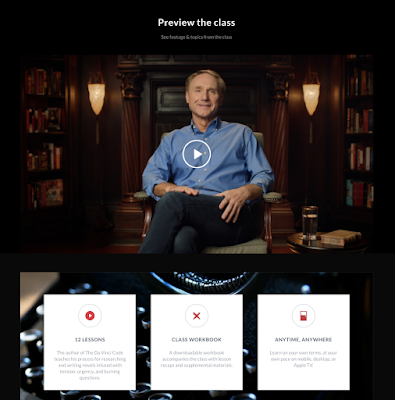
              Esta es una de las mejores propuestas de curso que he recibido para aprender a distancia durante el mes de confinamiento al que nos vimos sometidos en 2020, y me ha llegado a través de un anuncio en Youtube (el primer anuncio que veo entero como consumidora y productora Youtuber!). 

              Es la propuesta de curso mejor no sólo por el tema: aprender a escribir es una habilidad básica del ser humano, directamente relacionada con su capacidad de comunicarse. Además, el video y la presentación me ha fascinado. Y me ha hecho recordar a un amigo, hombre rinascimentale, que escribe novelas de ciencia dentro del género negro, y lo hace realmente bien, José de la Peña Aznar. José relata, enmarca y transmite con alma. Recomiendo su libro El año en que salvé a Einstein, cuya portada incluyo al final del post. Un libro para leer, disfrutar, aprender, y regalar a jóvenes y mayores, a aficionados a la física, las matemáticas y la ciencia en general Un libro para fans de Einstein y de Marie Curie, para amantes de la historia novelada, de la historia sobre la Europa de entreguerras, del fascismo y el populismo, para amantes del género negro, de las novelas que logran un equilibrio entre teatralidad y tempo.  Un libro para sociólogos y politólogos. Ya quisiéramos los sociólogos y politólogos ser capaces de reproducir ambientes reales y transmitirlos como lo hace José de la Peña.

              Os invito a que veáis el video thriller de presentación de Dan Brown. Un genio.

              De tener tiempo, yo me apuntaría al curso!  Y os invito después a disfrutar de la portada de libro El año en que salvé a Einstein al final del post. Video Dan Brown disponible en su momento aquí


              https://www.masterclass.com/classes/dan-brown-teaches-writing-thrillers?utm_source=Paid&utm_medium=Youtube&utm_campaign=DBr&utm_content=Video&utm_term=Aq-Prospecting&gclid=CjwKCAjw7e_0BRB7EiwAlH-goOW3mejT7EdfSiQ-lJ9Gb7jvjefq1zbCE5RtbYzEZcE2fjAirrTqqxoCsRYQAvD_BwE#


              EL DISFRUTE DEL LIBRO

              Y aquí la portada del libro El año en que salvé a Einstein, con Marie Curie en primera fila, primera por la izquierda. El libro está disponible para compra desde casa en Casa del Libro y en Amazón. El argumento lo explica Adela D. en su blog: "A Jan van Hoff le encargan una importante misión: encargarse de la seguridad del Consejo Solvay de física que va a tener lugar en Bruselas en el año 1927. Deberá investigar, prepararse y aprender mucho sobre física para desarrollar bien su tarea."


              Wednesday, 1 December 2021

              DOCENCIA HIBRIDA, VALORACION DOCENTE, FORMACION A LO LARGO DE LA VIDA Y EXPERIMENTACION

              Docencia híbrida! Nadie, ni en sus sueños mas dulces, ni en sus peores pesadillas imaginó que una pandemia nos ofrecería laboratorios de experimentación un año y medio de vuelco online. La UCM, la mayor universidad presencial de España ha realizado un salto de gigante. A ello han contribuido el equipo de tecnología, nuestro Vicerrector de Tecnología e Innovación, la Junta de coordinadores del campus virtual de cada Facultad, y el oráculo (sí! tenemos un oráculo!), cada profesor - con su vocación de servicio- los alumnos - con su flexibilidad, y el personal de administración y servicios.


              Mis evaluaciones de docencia están entre el nueve y el 10 (sobre 10) en la última edición de la que hay datos (curso 2020-21) con el primer curso. Son muchos, y un grupo muy diverso: chinos, LatAm, de Europa del este, del Africa Nor y Subsahariana... No es necesario que os explique cuanta pasión, esfuerzo, dedicacion y vocación tienen estos dos números, nueve y diez. Y cuantos ensayos de prueba y error, desde mi vuelta a la Universidad en 2010, pasando por la Universidad Internacional de Andalucia (donde formé a profes de posgrado en nuevas tecnologías) las tutorias de la UNED - Universidad Nacional de Educación a Distancia (Spain), con mis alumnos entrañables en las tutorias de Getafe, los dos campus de la @uniCarlos3, Getafe-Colmenarejo (viaje astral), la Universidad Autónoma de Madrid, con la que sigo colaborando en investigación transversal, mis experiencias de aprendizaje con universidades junto a la @FundacionBankinter, mi trabajo para la @UCJC, el @cigmap en Africa! y desde 2019 @uniComplutense*a tiempo completo. Un Ferrari no se fabrica en un día, pero en UCM *tenemos los componentes*. Y en la Unidad de Teorías, en mi Departamento, ya nos hemos puesto a ello.

              Tampoco hay agradecimiento mayor que pueda recibir un profesor. Gracias a mis estudiantes, por este reconocimiento a la docencia, su involucración, su confianza, y generosidad. Y gracias, Pascale Bang Rouhet, formadora primero y después mentora, desde 2008.

              ¿Y qué tal si entre otras medidas, para que lo híbrido funcione...?

              • Bajamos sueldos e incluimos un bono económico significativo ligado a resultados? Esta fue la base de la reforma educativa de #China estimado Ministro y colega de profesion, @joansubirats. Yo dejo ahí la idea. Claro, que hay muchos mas mecanismos para incentivar...
              • Y qué tal si nos esforzamos un poco más, y hacemos que el 20% de nuestros programas de asignaturas sea de involucración directa con el ecosistema social, asociativo, de partenariados público privados y de Pymes, que forman mas del 65% del tejido económico español? Esta es una idea para +ANECA, la +AgenciaNacionalEspañola
              Si la entrada de blog te ha interesado, por favor, comparte. Tus comentarios adicionales son bienvenidos. 

              Más información sobre este tema y la conversación que ha generado en este enlace en LinkedIn

              ARTICULO CIENTÍFICO: LA REGULACIÓN DE LA INTELIGENCIA ARTIFICIAL DESDE LA PERSPECTIVA DE LA TEORIA DE LA DEMOCRACIA

              La regulación de la inteligencia artificial es un tema clave de la administración pública, que toca de forma tangencial con otras disciplinas como la teoría política, la filosofía, la economía o la sociología. En el nuevo artículo de Olga Gil se abre un debate sobre cuestiones básicas que hay que plantearse a la hora de regular la inteligencia artificial y se propone “El cuarto poder independiente.” como un “ejercicio de la responsabilidad en el gobierno inteligente: regulación de la inteligencia artificial, tecnologías basadas en sofware y big data.” 


              EL TRABAJO


              El artículo se publica en el número 18 de la Revista Privacidad y Derecho Digital, dirigida por Pablo García Mexía: A fourth government branch. accountability in smart government development: the regulation artificial intelligence, software- enabled technologies and big data

              Es posible acceder al artículo a través de la Revista: Enlace


              La doctora Gil es miembro del  Departamento de Historia, Teorías y Geografía Políticas de la Facultad de Ciencias Políticas y Sociología y del Instituto Complutense de Ciencias de la Administración (ICCA)..


              MAS INFORMACION SOBRE EL TRABAJO, EN INGLÉS (lengua original del trabajo)

              The following work argues that ideas, being the cement of society, create obstacles for integrating governance of artificial intelligence into the world of devices. This work also posits that the features of artificial intelligence provide an opportunity to revise government priorities from a multilevel perspective. On ethical grounds, this work identifies the trade-off today that results from the simultaneous push for greater and faster technological advancement and innovation, and human wellbeing, which is not, by default, guaranteed. This trade-off, however, could be achieved in the future but is currently unresolved due to the current state of research, as well as the limits on the development of practical and applied private and public policy instruments. Finally, the article proposes a fourth independent government branch that would be endowed to ensure that algorithms in present democracies conform to constitutional principles. The purpose of adding this fourth governmental branch within modern democracies would be to enshrine the accountability of artificial intelligence development, including software-enabled technologies, and the implementation of policies based on big data within the context of a wider democratic regime.

              MAS INFORMACION SOBRE EL TRABAJO, EN CASTELLANO

              El trabajo defiende que las ideas, como cemento de las sociedades, hacen problemático consagrar la gobernanza de la inteligencia artificial al mundo de los dispositivos, y explica porqué. El trabajo también defiende que las características de la inteligencia artificial suponen una oportunidad para revisar las prioridades de los gobiernos desde una perspectiva multinivel, desde el nivel local hasta niveles supranacionales. En términos éticos, el trabajo enfatiza la tensión existente entre impulsar un mayor y más rápido avance de la tecnología centrado en la innovación, y el bienestar humano -donde este bienestar no está garantizado automáticamente por defecto. Esta tensión podría resolverse mediante un juego positivo en el que los actores participantes ganan, un resultado que a día de hoy no se ha producido ni se ha resuelto, ni en el ámbito de la investigación ni en el desarrollo de instituciones o instrumentos de gobierno públicos y privados. Finalmente, el artículo propone el desarrollo democrático de una cuarta rama gubernamental independiente, dotada para garantizar que los algoritmos de las democracias se ajusten a los principios de las Constituciones. El propósito de esta cuarta rama del gobierno en las democracias modernas sería consagrar la responsabilidad del desarrollo de la inteligencia artificial, incluidas las tecnologías habilitadas por software, y la implementación de políticas basadas en grandes datos, dentro de un contexto de régimen democrático más amplio.

              PALABRAS CLAVE: Inteligencia artificial, big data, transparencia, responsabilidad, democracia, políticas públicas, regulación

              KEY WORDS: artificial intelligence, big data, accountability, governance, democracy, public policies, regulation

              También es posible encontrar el trabajo en el repositorio Complutense: Enlace

              Thursday, 15 July 2021

              New global cities: Hong Kong

              New global cities series: Hong Kong


              Photo: Hong Kong, Olga Gil, 2019. All rights reserved. Todos los derechos reservados

              Tuesday, 1 June 2021

              CURSOS DE FORMACION DE PROFESORADO UCM

              Se ha abierto una nueva convocatoria de cursos de formación del profesorado que incluyen cursos presenciales y online (síncronos y asíncronos). La matriculación es posible desde las 10h del jueves tres de junio en este enlace. Esta oferta se abre con 804 plazas distribuidas en 29 cursos y tres cursos adicionales, sin límite de plazas.

              Los tres cursos asíncronos y sin límite de plazas son los siguientes:

              1. Uso de Teams, que se mantiene abierto
              2.  Formación en gestión integral de proyectos de investigación I: gestionar el presupuesto económico (se podrá realizar hasta diciembre)
              3. Comunicación inclusiva (se podrá realizar hasta julio)

              Wednesday, 19 May 2021

              Teaching public service in the digital age: David Eaves, civic technology entrepreneur and lecturer in public policy at Harvard Kennedy School

              In May 18th there is an update of the Project on Digital Government at the Ash Center  directed by David Eaves, civic technology entrepreneur and lecturer in public policy at Harvard Kennedy School (HKS). David Eaves, as director of the Project on Digital Government, analyses the US COVID19 vaccination platform and the relation to government practices and the general institutional framework: 

              • “A big part of the challenge is we’re now in the era of digital government, where every service you launch will have a digital component to it” 
              • “The capabilities to build and launch those types of services digitally are not straightforward for organizations that have been around for a period of time — but they are now core to what the government does.”
              • Government services are inherently digital, argues Eaves, but governments still lack the personnel and technological capacity to deliver services to a public that expects most simple tasks, such as scheduling a vaccine appointment, to be done effortlessly online. 
              •  These shortcomings have been addressed through the creation of Teaching Public Service in the Digital Age, a consortium of faculty from around the world working to create free teaching materials to build skills for government in the digital age.


              The syllabus -8 units for Master students- is available here

              The article is available at the following
              linkPublished on May 18, 2021 

              "Earlier this spring, millions rushed to schedule COVID vaccinations through a bevy of online portals managed by state and local governments. Instead of appointment slots, however, many were met with an unending string of error messages and broken websites that laid bare the obvious: The government was struggling with tech. In Massachusetts, the failure of the state’s online vaccine scheduling portal brought back memories of the failed 2013 launch of healthcare.gov, the federal government’s health insurance marketplace website. For David Eaves, a civic technology entrepreneur, lecturer in public policy at Harvard Kennedy School (HKS), and director of the Project on Digital Government at the Ash Center, the botched vaccination platform was not surprising. “A big part of the challenge is we’re now in the era of digital government, where every service you launch will have a digital component to it,” he says. “The capabilities to build and launch those types of services digitally are not straightforward for organizations that have been around for a period of time — but they are now core to what the government does.”


              Government services are inherently digital, argues Eaves, but governments still lack the personnel and technological capacity to deliver services to a public that expects most simple tasks, such as scheduling a vaccine appointment, to be done effortlessly online. “Technology in government first started as a military application, and then it slowly became a back-end office solution,” he explains. “Government only started communicating with the public online in the 2000s, and the idea that you could perform a transaction online, such as paying a parking ticket or filling out the census, is only a 2010s phenomenon.”


              Eaves points out that this digital pivot has beguiled the private sector, too, with no small number of legacy companies failing to anticipate the impact that digital technology would have on their business model. He notes, however, that the private sector fosters a competitive environment that compels businesses to change. “In the public sector, that doesn’t exist. Rather, it’s more of a generational turnover in the composition of the public sector workplace as well as demands of public and elected officials; it just takes longer for [the need to change] to be felt.”


              A public policy school like HKS offers the opportunity to train the next generation of public leaders with new skills, competencies, and ways of delivering services enabled by technology. But Eaves notes that across public policy schools and public administration schools, only 16% of MPA programs and 12.5% of MPP programs have a core class that focuses on technology-related issues. As a result, universities and civil service institutions are churning out graduates who are expected to set the pace of change in governments around the world despite lacking exposure to core technology competencies.


              So, Eaves reached out to faculty members at other institutions for a series of informal discussions about how they could collectively strengthen technology training for these emerging public sector leaders. “We developed this amazing team of faculty from around the world, who have all been contributing the ways they're thinking about this problem and teaching [about technology],” he says. Together, Eaves and his colleagues then began assembling a suite of curricular materials, including a shared syllabus that is open to anyone teaching government technology skills and competencies.


              These conversations eventually led to the creation of Teaching Public Service in the Digital Age, a consortium of faculty from around the world working to create free teaching materials to build skills for government in the digital age. Initially self-funded, Eaves and Tom Steinberg, a British civic technologist who serves as a senior advisor to the project took their work to the Public Interest Technology University Network Fund, which provided support to help build out the suite of curricular materials."